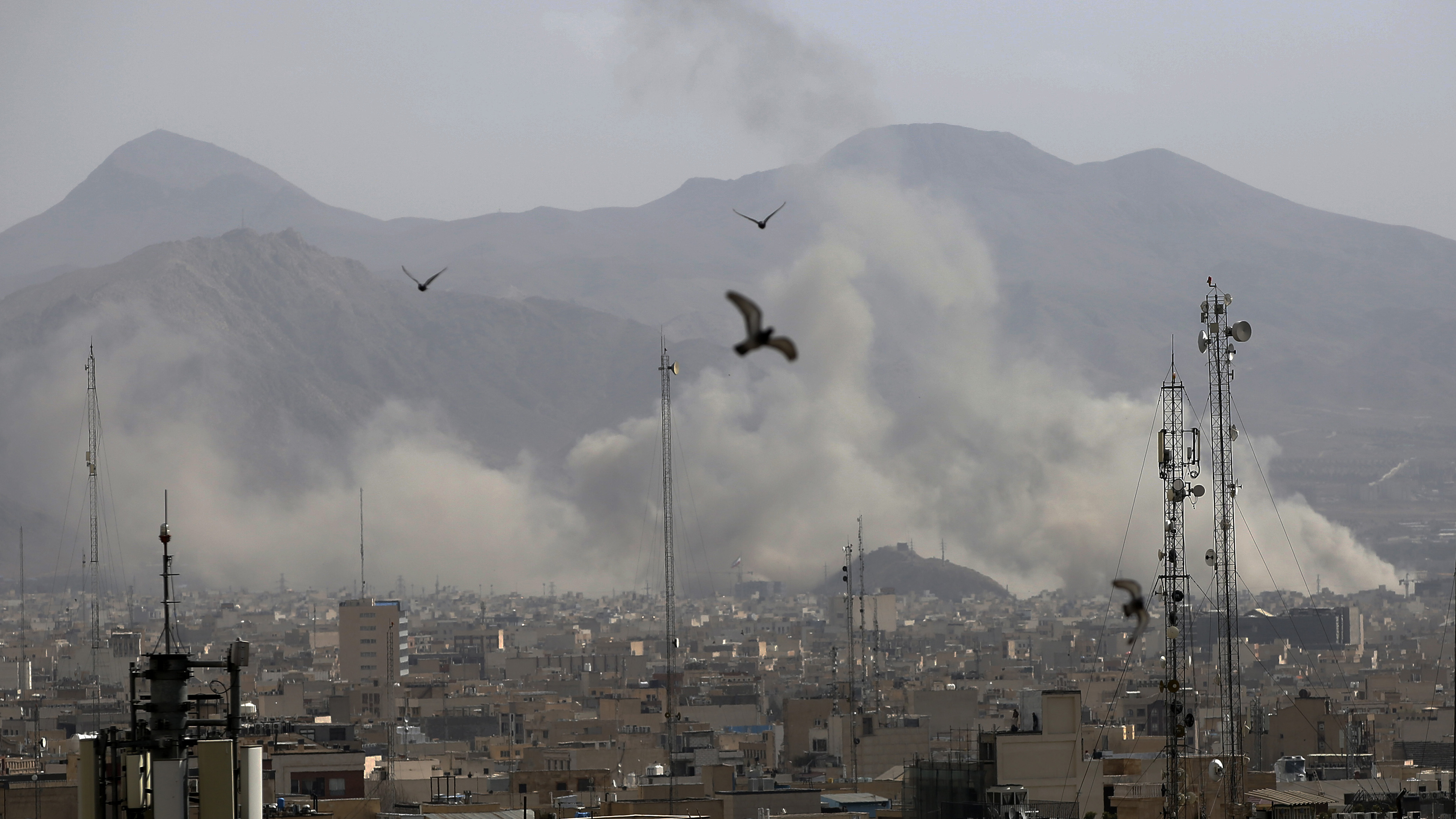
Iran's Nuclear Ambitions: Fueling Middle East Tensions
The Middle East stands perpetually on the precipice of conflict, and at the heart of this enduring volatility lies Iran's controversial nuclear program. This critical issue has evolved into a prominente Iran Konflikt, drawing in global powers and regional adversaries, each with their own intricate web of security concerns and strategic objectives. The pursuit of nuclear capability by Tehran, consistently framed as peaceful by the Islamic Republic, is viewed with profound suspicion and alarm by Western nations and especially Israel, who fear its potential weaponization. The resulting diplomatic deadlocks, military posturing, and proxy skirmishes paint a complex picture of a region grappling with existential threats and an uncertain future.
The Core of Contention: Iran's Nuclear Trajectory and Global Fears
At the epicenter of the escalating tensions is Iran's uranium enrichment program. While Tehran steadfastly maintains its program is for civilian energy and medical purposes, its actions have fueled international distrust. The international community's concern stems from the level of uranium enrichment achieved by Iran, which has significantly surpassed the limits set by the 2015 Joint Comprehensive Plan of Action (JCPOA), or the Iran nuclear deal. Enriching uranium to 60% purity, as Iran has done, is a critical step; while not weapons-grade (typically around 90%), it drastically reduces the "breakout time" – the period theoretically needed to further enrich enough material for a nuclear weapon. This technical capability, combined with Iran's sophisticated ballistic missile program, which could serve as a delivery system, forms the crux of the existential threat perceived by Israel and a major proliferation concern for the United States and its allies.
The history of this contention is marked by a delicate balance of diplomacy and confrontation. The Trump administration's withdrawal from the JCPOA in 2018 and the subsequent re-imposition of "maximum pressure" sanctions aimed at crippling Iran's economy and forcing new negotiations. However, Iran responded by accelerating its nuclear activities, demonstrating a resolve to advance its program despite external pressures. This back-and-forth illustrates a pattern where diplomatic overtures are often met with intensified threats and counter-actions, making a comprehensive resolution ever more elusive.
Key Players and Their Stances: A Tangled Web of Interests
Understanding the prominente Iran Konflikt requires an examination of the principal actors and their deeply entrenched positions:
- The United States: Successive US administrations have grappled with Iran's nuclear ambitions. While positioning himself as a global peacemaker, the former US President consistently adopted a hard line on Iran. His "maximum pressure" doctrine aimed to weaken Iran economically and diplomatically, leading to the withdrawal from the JCPOA and the implementation of severe sanctions. This approach included military strikes on nuclear sites in conjunction with Israel and stark warnings against crackdowns on Iranian mass protests, underscoring a policy of both engagement (reopening negotiations in February) and aggressive deterrence (multiplying threats). For a deeper dive into the roles of these nations, read our article: US, Israel, Iran: Key Players in the Escalating Conflict.
- Iran (Supreme Leader Ali Khamenei): As the ultimate authority in the Islamic Republic since 1989, Supreme Leader Khamenei embodies Iran's posture of defiance against its adversaries, primarily the US and Israel. He views uranium enrichment as a sovereign right and has overseen the steady advancement of Iran's nuclear and ballistic missile programs. Khamenei's foreign policy prioritizes expanding Iran's regional influence through a network of proxies, including Hezbollah in Lebanon, various militias in Syria and Iraq, and the Houthis in Yemen, all of whom share a commitment to Israel's destruction. Skeptical of diplomacy, Khamenei insists Iran will "never surrender" and refuses to negotiate on its missile program or abandon uranium enrichment, warning that any US-initiated war would be a "regional war."
- Israel (Prime Minister Benjamin Netanyahu): For decades, Israeli leadership, particularly Prime Minister Netanyahu, has articulated Iran's nuclear ambitions, its burgeoning missile arsenal, and its support for terror groups as an existential threat to the Jewish state. Netanyahu has consistently advocated for military action to prevent Iran from acquiring nuclear weapons capabilities. His public statements, including direct appeals to the Iranian public for freedom from tyranny, and recent warnings of severe repercussions if Iran attacks, highlight Israel's proactive and often hawkish stance. The push for military action, evident during the 12-day conflict last June, underscores Israel's commitment to preemptive strikes to neutralize perceived threats.
Beyond these primary actors, Gulf countries have also expressed deep concerns, accusing Iran of destabilizing the region and even targeting civilian infrastructure. This complex interplay of national interests, ideological divides, and security fears makes the situation incredibly volatile.
The Shadow War and Regional Destabilization
The prominente Iran Konflikt extends far beyond the nuclear dossier, manifesting as a pervasive shadow war across the Middle East. Iran has strategically cultivated a vast network of proxy groups and allied militias, effectively projecting its power and influence from the Levant to the Arabian Peninsula. Groups like Hezbollah in Lebanon, various Shiite militias in Iraq and Syria, and the Houthi movement in Yemen receive arms, funding, and training from Tehran, serving as critical instruments for advancing Iranian interests and challenging the regional status quo. This strategy allows Iran to engage its adversaries without direct military confrontation, creating a buffer zone while maintaining plausible deniability. However, it also significantly fuels regional instability, leading to humanitarian crises and prolonged civil conflicts.
The implications of this shadow war are far-reaching. Clashes between these proxies and their adversaries—often supported by Israel or the United States—periodically escalate, threatening to spiral into broader regional conflicts. The potential for a "regional war," as warned by Supreme Leader Khamenei, is a constant, terrifying possibility, underscoring the interconnectedness of these proxy battlegrounds. Understanding the dynamics of these regional flashpoints is crucial to grasping the full scope of the Iran-Israel standoff; delve deeper into this aspect with our article: Regional War Threat: Understanding the Iran-Israel Standoff.
Furthermore, the accusations by Gulf countries of Iran targeting civilian infrastructure, such as hotels, highlight the destructive potential of this covert warfare, impacting not only geopolitical stability but also economic development and civilian safety across the region.
Navigating the Future: Pathways and Perils
The path forward in the prominente Iran Konflikt is fraught with challenges and difficult choices. Diplomacy remains the most desirable, yet often the most frustrating, route. The intermittent negotiations with Iran, marked by skepticism from Khamenei and continued threats from the US, illustrate the deep mistrust and divergent objectives that plague any potential breakthrough. For a deal to be effective, it would likely need to address not only nuclear enrichment but also Iran's ballistic missile program and its regional activities—areas Tehran has consistently refused to discuss. Sanctions, while economically impactful, have so far failed to fundamentally alter Iran's strategic calculus or its leadership's resolve.
The alternative to diplomacy—military action—carries immense risks. Targeted strikes against nuclear facilities, while intended to cripple Iran's capabilities, could provoke a retaliatory regional war, drawing in numerous actors and causing catastrophic human and economic costs. The domestic situation within Iran, marked by sporadic mass protests and a government crackdown, adds another layer of complexity. Internal instability could either force the regime to compromise or lead it to double down on its confrontational stance to rally nationalist support.
It's crucial for observers and policymakers alike to discern between rhetoric and actionable policy. Threats and warnings are often part of a coercive diplomatic strategy, but they carry the inherent risk of miscalculation. Practical tips for understanding this complex arena include analyzing not just what leaders say, but what capabilities they deploy and what alliances they solidify. The international community faces the delicate task of de-escalation while simultaneously preventing nuclear proliferation. This requires coordinated efforts, clear communication channels, and a willingness to find creative solutions that acknowledge the legitimate security concerns of all parties involved.
The prominente Iran Konflikt over Iran's nuclear ambitions is more than a regional dispute; it is a critical global security challenge. The intricate web of national interests, historical grievances, ideological imperatives, and military capabilities has created a highly volatile environment. While the pursuit of a nuclear weapon remains unconfirmed, the technical progress made by Iran and the entrenched positions of key players continue to fuel Middle East tensions. Moving forward, careful diplomacy, robust deterrence, and a deep understanding of the motivations of all actors will be paramount to navigate this perilous landscape and prevent a catastrophic escalation.